



Low Voltage Industrial Transformer
Europe/IEC standards
North America/NEC
Industrial application
Handles three-phase power (common) or single-phase
Robust performance in harsh environments (factories, plants)
Definition & Voltage Classification
Low Voltage (LV): Typically refers to voltages ≤ 1000V AC or 1500V DC, varying by region:
- Europe/IEC Standards: Up to 1000V AC.
- North America/NEC: Up to 600V AC.
Industrial Use: Designed for robust performance in harsh environments (factories, plants). Handles three-phase power (common) or single-phase.
Key Features
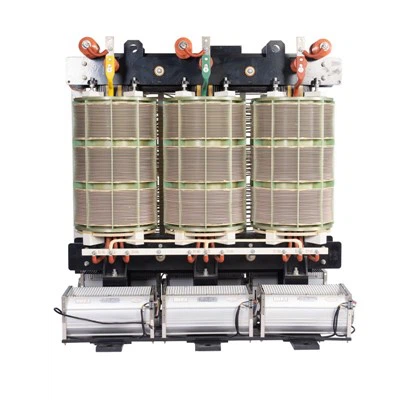
Dry-type: Air-cooled, no flammable liquids (safe for indoor use). Subtypes: Encapsulated (resin-coated) or ventilated.
Oil-cooled: Rare in LV due to safety concerns; used in high-power scenarios.
High efficiency: Meets standards like DOE (U.S.) or IEC 60076 (global). High efficiency reduces operational costs.
Good protection: thermal overload sensors, IP-rated enclosures (dust/water resistance), corrosion-resistant materials.
Low impedance: Low impedance for minimal voltage drop; critical for motor starting.
Main Types
Isolation transformers: Separate primary/secondary circuits; enhance safety and reduce electrical noise.
Autotransformers: Single winding; cost-effective but no isolation.
Control transformers: For control circuits (e.g., PLCs, relays) with precise voltage regulation.
Buck-boost transformers: Adjust voltage levels (±10–20%) for stabilization.
Main Applications
Power Distribution
Step down medium voltage (e.g., 11kV) to 400V/230V for machinery.
Motor Drives
Supply motors in conveyor systems, pumps.
Lighting/HVAC
Low-voltage lighting networks, HVAC controls.
Renewable Integration
Interface solar/wind systems with industrial grids.
Selection Criteria
kVA Rating
Size based on load (including future expansion). Common range: 1kVA to 2500kVA.
01
Voltage Ratings
Primary (e.g., 11kV, 480V) and secondary (e.g., 400V, 208V).
02
Frequency
50/60 Hz compatibility.
03
Temperature Rise
Class B (80°C) or F (115°C) insulation for thermal endurance.
04
Tap Changers
Adjust output voltage ±5% % to compensate for supply fluctuations.
05
Installation & Safety
Environment
Ensure ventilation, minimal dust, and non-corrosive conditions.
Standards
Compliance with UL 5085, IEC 61558, NEC Article 450.
Grounding
Critical for safety; prevents electric shock.
Advantages
Safety
Reduced risk of electric shock due to lower secondary voltages.
Energy Efficiency
Minimizes losses in power distribution.
Durability
Built to withstand industrial stresses (vibration, temperature swings).
Example Specifications
|
Primary Voltage |
480V AC (three-phase) |
|
Secondary Voltage |
208Y/120V AC |
|
Rating |
150 kVA, 60Hz |
|
Impedance |
4%, Temperature Rise: 115°C (Class F) |
Summary
- Vital for safe, efficient power distribution in industrial settings.
- Proper selection, installation, and maintenance ensure longevity and reliability, supporting operations from motor drives to control systems.
- Always consult regional standards and load requirements when designing systems.
Hot Tags: low voltage industrial transformer, China low voltage industrial transformer manufacturers, suppliers, factory, Special Rectifier Transformer, Phase Shifting Transformer for VFD, Low Voltage Industrial Transformer, Low Voltage Isolating Transformer, Rectifier Transformer for VFD, dry type transformers
You Might Also Like




Send Inquiry