



Power Controller
Your Leading Power Controller Supplier
LTEC is a leading supplier that designs, manufactures, tests, and markets various types of reactors, capacitors, filters, transformers, and power controllers. We provide data converter products, power management solutions, and reference designs for power conversion, driver monitoring, sequencing, and energy management applications across various industries.
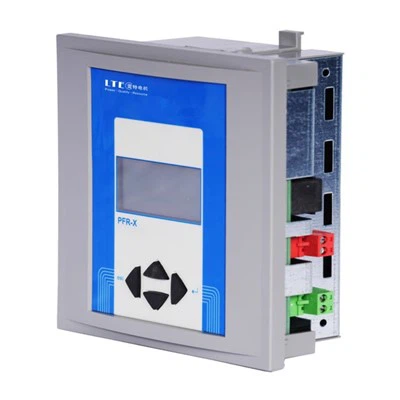
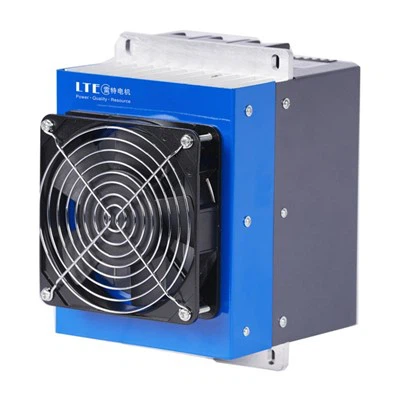
Why choose us?
Our factory
Our primary production plant in Kunshan City spans an area of 20,000 square metres, situated one hour's drive away from the Shanghai Airport (PVG). We have about 120 patents related to our products.
Sales market
Our products have been exported to the United States, Germany, the United Kingdom, Israel, Australia, and more than 60 countries and regions around the world.
Custom service
We provide our customers with world-class LV and HV products, along with reliable technology and friendly, flexible customer support. Additionally, we develop "tailor-made" products and solutions tailored to your applications.
Our certificate
We deliver top-quality products that meet international standards such as UL, TUV, CE, EAC, and GOST. Our commitment to excellence is supported by our ISO9001 certification for quality management.
Types of Power Controller
Manual control systems
The simplest form of control, manual systems, requires human intervention to operate. Think of a light switch—a simple, effective method to control lighting.
Automatic control systems
Automatic systems eliminate human error by utilizing sensors and feedback loops to maintain or adjust operations without requiring manual input. These systems are at the heart of home automation and industrial manufacturing processes.


Open and closed loop systems
Open-loop systems operate on a fixed input without feedback to adjust their output. In contrast, closed-loop systems (also known as feedback control systems) continuously monitor their output to adapt and to maintain the desired level of performance. This feedback mechanism is what makes closed-loop systems particularly effective in complex, variable environments.
CNC electrical control systems
A standout in industrial applications, Computer Numerical Control (CNC) systems represent the pinnacle of automation technology. These advanced systems use software and detailed programming to operate machinery with precision far beyond human capability, playing a crucial role in manufacturing and engineering.
Silent operation – Power Controllers do not generate acoustical noise when switching power to/from the load since they contain no moving parts. Therefore, they are the preferred solution in many commercial or residential applications where acoustical noise can quickly become an annoyance.
Shock & vibration resistance – Since Power Controllers have no moving parts, they are not prone to false triggering under load in harsh environments subject to shock & vibration.
Fast operation
Instantaneous turn-on Power Controllers can switch power to a load within less than 100 microseconds of receiving an input signal. This makes them ideal for phase-angle control applications where tight control over power to the load is required.
PLC compatibility
As opposed to large contactors or other mechanical relays, Power Controllers can switch heavy loads with only a few milliamps of input current.
Environmentally friendly
Power Controllers contain no mercury. Also, the abbreviated life expectancy of electromechanical relays means that hundreds, if not thousands, of EMRs will fail and have to be disposed of before a single end-of-life Power Controller failure.
In general, they are used wherever, for example, electrical power is precisely adjusted and usually converted into thermal energy. Examples include plastics processing or industrial furnace construction. Power controllers are often used whenever the power consumption of an electrical consumer needs to be precisely controlled.
The technical process:
Used in the control system to reduce the so-called "effective value" of the AC voltage provided by the power grid. The sinusoidal curve of the mains voltage is influenced by power controllers so that the load is only ever "switched on" after the zero crossing at a certain part of the oscillation.
Partial "switching on" reduces the current and power consumption of the load. Power controllers can be operated in three-phase or single-phase mode, which are controlled by one or more regulators. These vary the so-called switch-on time of the voltage from the mains for the connected load.

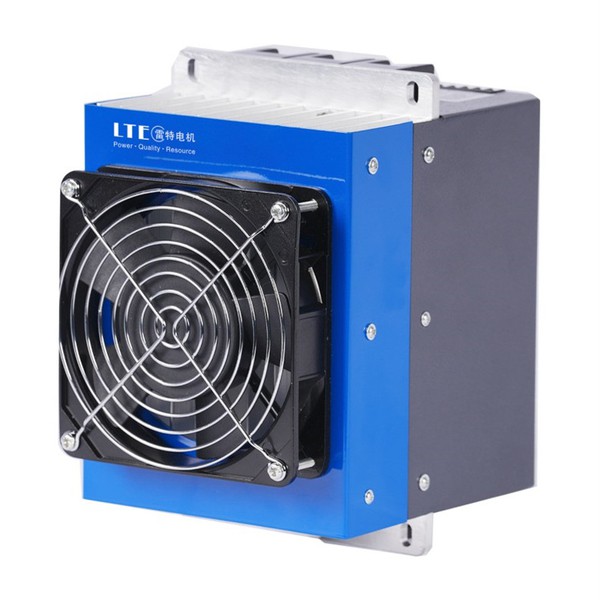
Functionalities of a power controller:
- Precisely set current regulations or current limitations, monitor fuse failure, line break, or load voltage failure, and protect the function of electronic components.
- When the system is down, the affected heating element can be replaced.
- The heater is protected from excessive operating temperatures. The heating element has a maximum permissible temperature, which is limited by the power output of the power controller.
- The power controller can also be used as an electronic component to limit and control the DC voltage.
- Unlike conventional rectifiers or inverters, these components do not rectify the current.
Shipping term: FOB SHANGHAI
Delivery time: 4-6 weeks after we receive your payment.
Payment term: The advance payment is 100%, all by T/T.
Price validity: One month
Warranty: 18 months after delivery (excluding natural disasters, human factors, improper use, etc.)

Deliver, Shipping, And Serving

FAQ