



Dry Type Transformers
Your Leading Dry Type Transformers Supplier
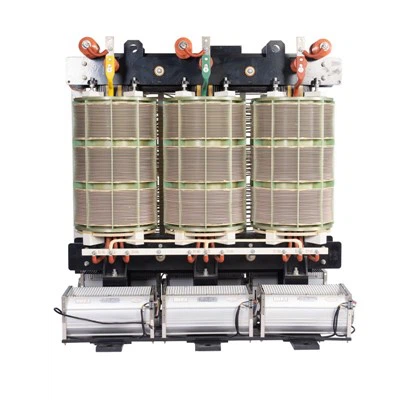
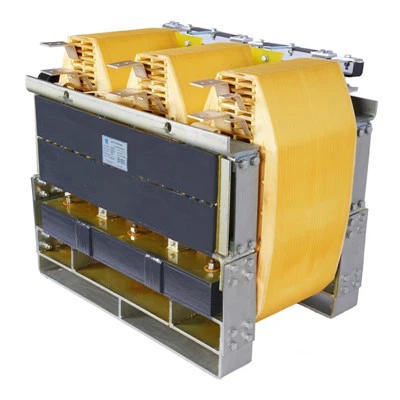
LTEC is the leading manufacturer and supplier of various types of dry-type transformers. We specialize in providing dry-type transformers that serve the industrial, construction, commercial, mining, OEM, and utility markets, all while maintaining quality. With a team of experts with masterful experience, we can offer you a variety of solutions and professional services.






Why choose us?
Our factory
Our primary production plant in Kunshan city spans an area of 20,000 square metres, situated one hour's drive away from the Shanghai Airport (PVG). We have about 120 patents related to our products.
Sales market
Our products have been exported to the United States, Germany, the United Kingdom, Israel, Australia, and more than 60 countries and regions around the world.
Custom service
We provide our customers with world-class LV and HV products, along with reliable technology and friendly, flexible customer support. Additionally, we develop "tailor-made" products and solutions tailored to your applications.
Our certificate
We deliver top-quality products that meet international standards such as UL, TUV, CE, EAC, and GOST. Our commitment to excellence is supported by our ISO9001 certification for quality management.
Dry-type no-load transformer
This type of transformer is mainly used to transfer electrical energy from one voltage level to another without generating losses under load conditions. They are often employed in power systems for voltage transformation purposes, such as step-up, step-down, or isolation between different voltage levels.
Dry-type cast resin transformer
This is the most common type of dry-type transformer. They use insulating materials like epoxy resin to encapsulate windings and other critical components. This type of transformer is widely used in indoor environments due to its excellent insulation performance, absence of liquid coolant requirements, and environmental friendliness.
Dry-type isolation transformer
This transformer is used to isolate the power supply voltage from the load voltage, providing electrical safety and insulation performance. They can also be used to suppress electromagnetic interference and provide grounding insulation.
Dry-type rectifier transformer
This type of transformer is typically used in direct current (DC) power systems to convert alternating current (AC) voltage to direct current voltage. It finds applications in industrial equipment and power electronic devices.
Dry-type autotransformer
Autotransformers, unlike conventional transformers, share a portion of their winding. These transformers allow for different voltage transformations within a relatively smaller volume, but careful consideration of electrical isolation is needed.
Benefits of Dry Type Transformers


Safety: They pose minimal risk to people and property as they lack flammable or toxic liquids that could leak or catch fire.
Maintenance-free and pollution-free: These transformers require no oil changes, oil tests, spill cleanup, or special disposal methods, contributing to both low maintenance and environmental friendliness.
Ease of installation: Installation is straightforward, as dry-type transformers do not demand vaults or special foundations. Placing them near the load minimizes the need for lengthy and expensive low-voltage cables.
Environmental friendliness: With no emissions of harmful gases and no contribution to the greenhouse effect, dry-type transformers stand out as environmentally conscious solutions.
Overload capacity: They exhibit excellent support for overloads, thanks to superior heat dissipation and thermal endurance compared to oil-filled transformers.
Reduced civil installation costs: Dry-type transformers eliminate the need for oil containment pits, fire walls, fire extinguishers, or sprinklers, resulting in cost savings on civil installation works and fire protection systems.
Seismic resilience: Their rigid structure enables them to withstand vibrations and shocks, ensuring excellent performance during seismic events.
Fire hazard mitigation: Dry-type transformers possess self-extinguishing properties, minimizing the risk of fires. They do not produce smoke or flames in case of faults.
Resistance to short-circuit currents: These transformers boast low impedance and high mechanical strength, providing excellent resistance to short-circuit currents.
Longevity: The use of high-quality insulation materials allows dry-type transformers to withstand high temperatures without degradation, ensuring a long-lasting operational life.
Suitability for damp and contaminated areas: Featuring high moisture ingress protection and corrosion resistance, dry-type transformers are well-suited for operation in damp or contaminated environments.

Chemical, oil, and gas industry: Dry-type transformers are used to supply power to various equipment and processes that involve flammable or explosive substances, such as refineries, petrochemical plants, pipelines, offshore platforms, etc.
Environmentally sensitive areas: Dry-type transformers are used to protect the environment from oil spills or leaks that can contaminate water sources, soil, or wildlife habitats, such as water protection areas, forests, wetlands, etc.
Fire-risk areas: Dry-type transformers are used to prevent fire hazards or minimize fire damage in areas that are prone to fire outbreaks or have strict fire regulations, such as indoor substations, underground substations, hospitals, schools, hotels, shopping malls, etc.
Renewable generation: Dry-type transformers are used to connect renewable energy sources to the grid or to the load, such as wind turbines, solar panels, hydroelectric plants, etc.
Other applications: Dry-type transformers are also used in other applications that require high performance, low maintenance, or special features, such as traction systems, marine systems, mining systems, data centers, etc.
Terms and conditions
Shipping term: FOB SHANGHAI
Delivery time: 4-6 weeks after we receive your payment.
Payment term: The advance payment is 100%, all by T/T.
Price validity: One month
Warranty: 18 months after delivery (excluding natural disasters, human factors, improper use, etc.)
Deliver, Shipping, And Serving

FAQ